

Stop Hedging Your Best Bets: The One-Page Filter for Where to Go All In This Quarter (+ Free Template)
I run quarterly OKRs and an annual playbook. I keep a cushion most operators would envy. And for two years, I used every bit of that to play small.
That's the trap nobody warns you about. The more you build, the more you have to protect. The more you protect, the smaller you bet. You call it discipline. It's avoidance with a spreadsheet.
It took my advisor stopping me mid-sentence to see it.
A couple of months ago I was walking him through a deal I'd already designed, priced, and written the email for. I was one click from sending it. Then I said the two words that gave me away.
"We'll see."
He stopped me. "You built the entire thing. You can afford it if it fails. So why are you still betting like you're broke?"
I didn't have a good answer, because the honest one was embarrassing. When I have a cushion, my first instinct is to protect it. So the exact thing that's supposed to fund the bold move quietly becomes my reason not to make it. The safer I get, the smaller I bet, and the language follows. "We'll see." "Let's see how it goes." "We should probably."
The hedge in my words was the risk-aversion in my behavior. One pattern, not two.
I saw it everywhere once he named it. The JV I'd already committed to, then quietly watered down with "let's see how it goes," which only shrank the upside and never the risk. The $50K software project I wouldn't make, so I bought myself a second job and capped the work at one person. Me.
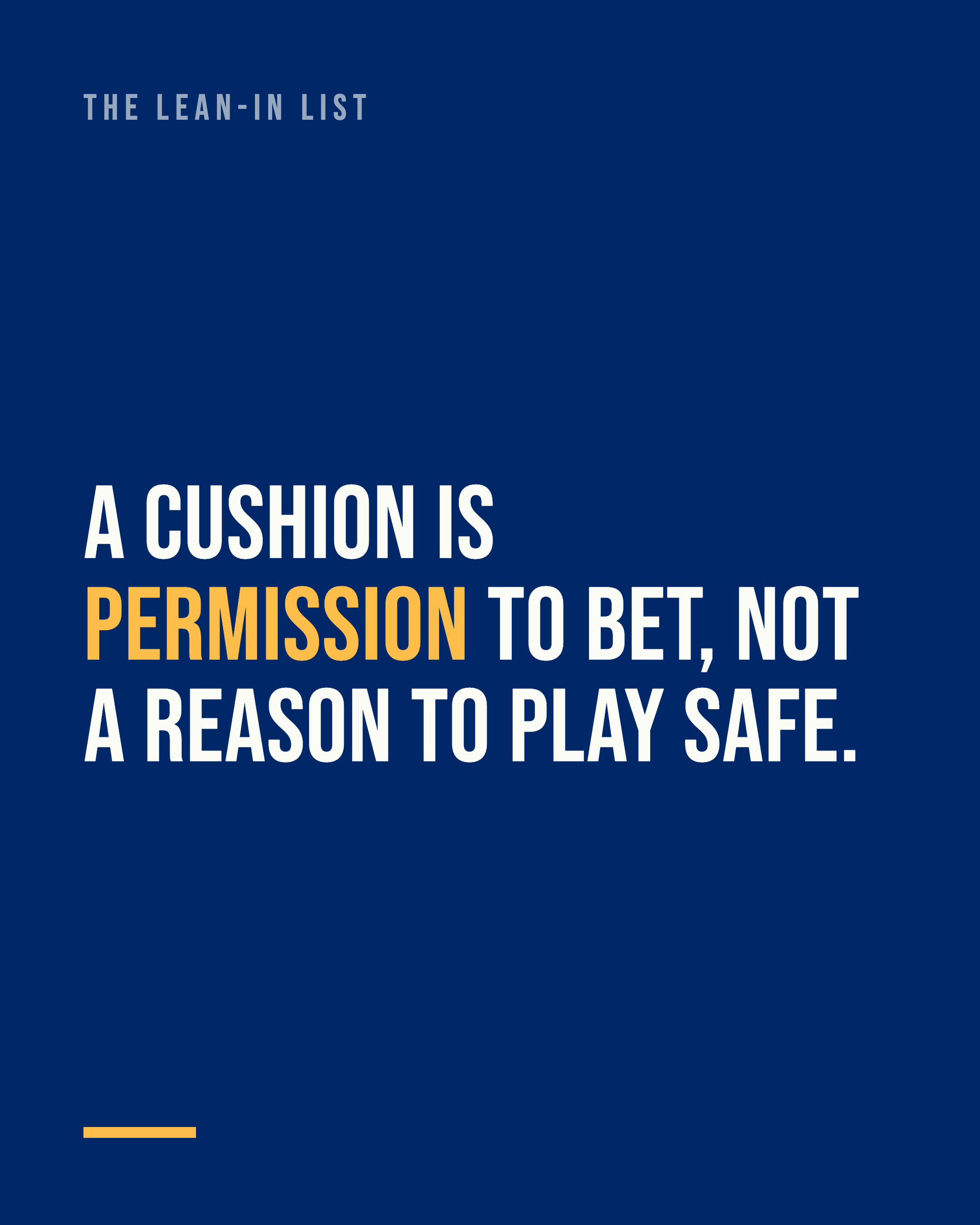
He gave me the line I now keep at the top of the page: a cushion is permission to bet, not a reason to play safe. Your cash, your margin, and a working machine are the chip stack that lets you re-raise. Not a reason to fold. Certainty never shows up anyway. Step off the curb, not off the cliff.
Here's what that conversation forced me to admit. I'd mastered the half of focus everyone teaches: subtraction. Cut the list, say no, get to five. "Do less" is the most repeated advice in business, and it's not wrong. It's half a strategy. Subtraction only ever tells you what to stop. It never tells you where to press harder, and pressing harder on the few things that matter most is the half that moves a year.
So I built a one-page tool for the other half.
Not to replace the OKRs. To sit on top of them and force the question they never did: where am I playing too safe on the few things that matter most? I call it the Lean-In List.
It has three parts.
1. The filter
Brain-dump every place you could bet bigger. Eight to twelve candidates, no filter, including the ones you've been hedging on with "we'll see." Then run each one through four questions. To survive, it has to clear all four:
Is it the biggest upside per dollar or hour at risk? Not the biggest upside. The biggest upside relative to what it costs you.
Does it compound, or is it a one-off? A one-off win is a paycheck. A compounding win is an asset.
Can only you pull it off? If anyone could run it, it's not your bet to make.
Does it free you from the operator seat, or chain you to it? If winning means you can never leave the chair, you didn't win. You bought a cage.
Most candidates die at question one. That's the point.
2. Three bets, sized to scare you
Pick three survivors and make them different shapes. One Growth bet, a new top-line. One Leverage bet, deploying something you already hold. One Acceleration bet, pushing something that already works harder. And one of the three has to scare you a little. That's the forcing function. If none of them make your stomach drop, you played it too safe and you're back to defense.
Then size them, and this is where most "focused" leaders lose the year. They get to a clean short list and feed every item equally, because equal feels fair. Equal isn't focus. Five priorities at twenty percent each are five half-built bridges, none of them load-bearing. A bet funded at full ration compounds. The same bet split five ways only survives. Survival feels safe, and it's how good operators lose a year without ever making one dramatic mistake. Fund unevenly on purpose.
3. The Conviction Rule
Write one page per bet: what it costs, how you'll kill it if it turns, and what the win looks like in real dollars and dates. Then ban hedge language on the page. Every "we'll see" becomes a named outcome and a date. The memo does something quietly powerful: once you write the worst case as a real number you can survive, the bet stops feeling like a cliff and starts feeling like a decision. If you can't describe it out loud without reaching for "we'll see," it isn't a bet yet. It's a wish with a budget.
What this buys you
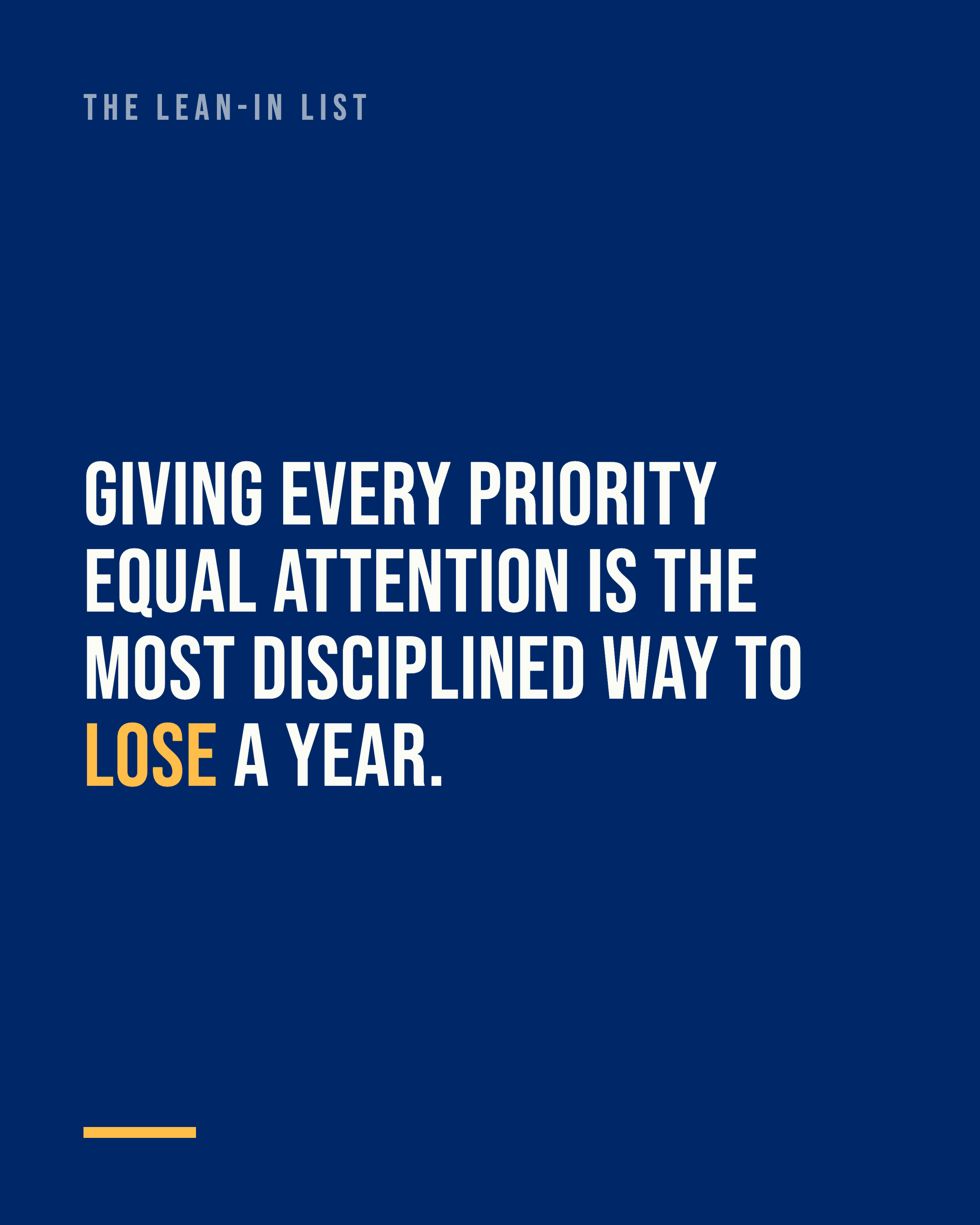
Cutting is how you survive the quarter. Leaning in is how you win the year. The leaders who compound aren't the ones with the shortest list. They're the ones who cleared the deck and then had the nerve to over-invest in the two or three things that matter most, while everyone else fed five priorities a polite, equal, useless slice.
Anyone can make a list of what to quit. The hard one is naming where to go all in, putting a number and a date on it, and refusing to hedge.
Steal the template
I built the blank version of the exact page I use, and it's free. No email, no gate. Grab the Lean-In List template, block ninety minutes before your next quarter starts, and fill out all three bets. Bring them to someone who'll hold you to them. Then watch how many of your "we'll see" projects die the second you have to write a date next to them.


